Following The Nutcracker and Swan Lake, another of Pyotr Ilyich Tchaikovsky’s grand ballets, The Sleeping Beauty also returns to the repertoire of the Hungarian National Ballet this season. Presented at the Hungarian State Opera between 6 and 16 June 2026, the production is performed in the internationally acclaimed choreography of Sir Peter Wright, in four casts, with the participation of Hungarian State Opera Orchestra and the Hungarian National Ballet Institute.
As one of the key story of European fairy-tale literature, The Sleeping Beauty transforms centuries-old traditions of coming of age into a fairy tale set in a royal court, interwoven with danger and romance. The first collaboration between Marius Petipa and Pyotr Ilyich Tchaikovsky drew its inspiration primarily from Charles Perrault’s tale, reflecting the culture of the French Baroque court, while also incorporating elements from the version by the Brothers Grimm. The management of the Imperial Theatres in St Petersburg, passionately devoted to French culture, intended the spectacular production as a tribute to the splendour of the court of Louis XIV. Following its successful premiere in 1890, the work became one of the cornerstones of the classical ballet repertoire, while its famous waltz also lived on in the 1959 Disney animated adaptation as the song Once Upon a Dream.
This November, the distinguished British choreographer Sir Peter Wright celebrates his 100th birthday. It was exactly 45 years ago, in 1981 that he premiered his own version of The Sleeping Beauty with the Dutch National Ballet in Amsterdam. Former director of the Sadler's Wells Royal Ballet, the touring company of the Royal Ballet, and later of the Birmingham Royal Ballet, Wright gave greater dramatic cohesion to Petipa’s choreography: storytelling assumes a stronger role, the conflict between the Lilac Fairy protecting Princess Aurora and the evil Carabosse becomes more pronounced, while Prince Florimund’s emotional motivations are also more clearly defined.
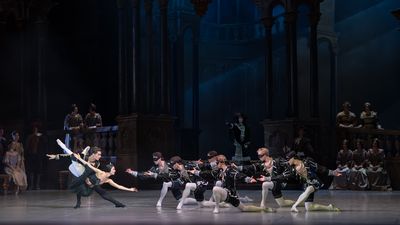
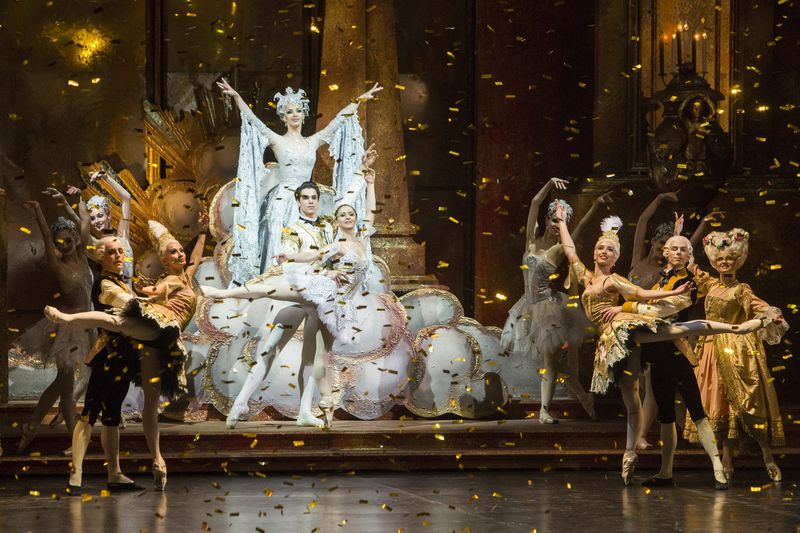
The Hungarian National Ballet first presented this lavish large-scale production in spring 2016, featuring spectacular designs by Philip Prowse. The production involves 65 ballet dancers, 7 ballet students, and 14 actors portraying nearly 160 roles. Owing to the renovation of the Opera House, the ballet now returns to the company’s repertoire after a ten-year absence. From the quadruple cast of the Hungarian premiere, Tatyjana Melnyik and Ármin Gergő Balázsi return as Aurora and Florimund. Maria Yakovleva, Maria Beck, and Soobin Lee make their debuts in the female lead, while Viachaslau Hnedchyk, Louis Scrivener, and Boris Zhurilov debut in the male lead role. The Lilac Fairy is performed for the first time by Yuiko Adachi, Vivien Csokán, Xénia Kulikova, and Florence Joffre, while Carabosse is portrayed for the first time by Jessica Leon Carulla, Katerina Taraszova, Lea Földi, and Aglaja Sawatzki.
The Hungarian State Opera Orchestra is conducted by David Coleman, who has previously composed several works for the ensemble and, as an internationally active ballet conductor, has conducted all three of Tchaikovsky’s ballets on numerous occasions.
The Sleeping Beauty is performed eight times this season at the Hungarian State Opera: 6, 9, 10, 11, 13, 14, 15, and 16 June.
Photo by Zsófia Pályi