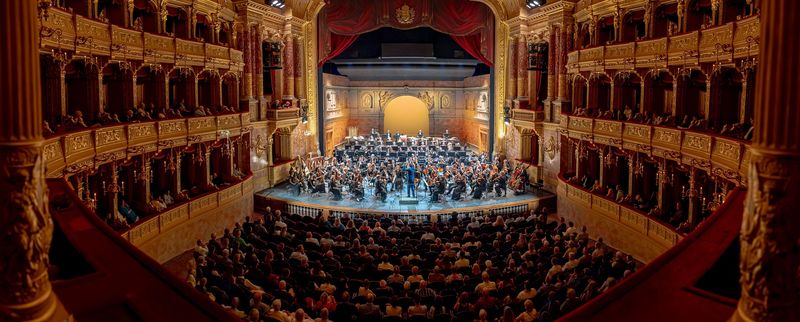
The Hungarian State Opera’s 1956/70 – Kodály Gala Concert presents a selection of Zoltán Kodály’s emblematic works. The programme on 10 October features Psalmus Hungaricus and Háry János Suite as well as the ballet music from the stage work also known as Dragon Dance, first performed a century ago. The concert also provides the occasion for the ceremonial presentation of the European Heritage Award / Europa Nostra Award at the Opera House, which was awarded for the comprehensive restoration of the Ybl Palace.
Zoltán Kodály had an especially close relationship with the Hungarian State Opera: all three of his stage works – Háry János, celebrating its centenary this year, The Spinning Room (1932), and The Ballad of Czinka Panna (1948) – had their world premieres at the Opera House. The Budapest Philharmonic Orchestra, whose musicians came from the Opera, also gave the first performance of Dances of Galánta here in 1933. Kodály conducted here on several occasions, survived the siege of Budapest here, and it was also here that his newly composed Missa brevis was first performed. In 2022, the Opera elected him a posthumous eternal member.
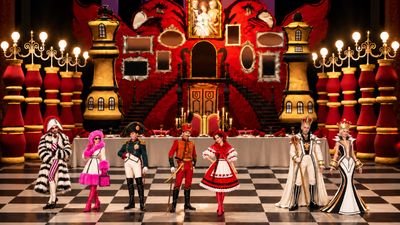
Háry János, first performed on 16 October 1926, occupies a prominent place in the concert programme. Through the adventures of the boastful old veteran, Kodály created a distinctly Hungarian musical world rooted in folk tradition, combining the grotesque with the lyrical. The concert opens with the Ballet Music written for the stage work, also known as Dragon Dance, conducted by Dániel Erdélyi. The six-movement orchestral suite based on the work, first performed in Barcelona in 1927, evokes the most characteristic moments of the stage work, from the orchestral “sneeze” announcing the beginning of the tale to Napoleon’s imaginary defeat. The richly orchestrated, folk-inspired composition will be conducted by István Dénes, a Liszt Prize-winning eternal member of the Opera.
Kodály’s choral music is represented by Hymn to King Saint Stephen, composed in 1938 for the 900th anniversary of the death of King Saint Stephen. Written at the request of Székesfehérvár, the work sets to a new melody an 18th-century text beginning “Ah, where are you, radiant star of the Hungarians”. The piece is performed by the Opera Chorus under the direction of chorus director Gábor Csiki.
The second half of the concert focuses on Kodály’s work as a collector and arranger of folk music. The five military songs from Volume VI of the Hungarian Folk Music series trace a path from the idealised image of recruitment and the life of the hussar to the bitter experience of wartime service. The songs are performed with tenor Gergely Ujvári, conducted by Kálmán Szennai.
The monumental finale of the evening is Psalmus Hungaricus, composed in 1923 to mark the 50th anniversary of the unification of Budapest. Kodály connected the words of Mihály Kecskeméti Vég’s 16th-century psalm paraphrase – concerning persecution, betrayal and trust in God – with the experience of Hungary following the First World War and the Treaty of Trianon. Performed with the Budapest Philharmonic Orchestra, the work became Kodály’s first major international success. The tenor solo is sung by Szabolcs Brickner, the Opera’s Kammersänger of the 2023/24 season, while the Opera Orchestra and Chorus are conducted by Ádám Medveczky, Kossuth and Liszt Prize-winning eternal member and master artist.
The 1956/70 – Kodály Gala Concert forms part of the Opera’s programme of major events dedicated to Kodály. Even after the suppression of the 1956 Revolution, the composer continued to serve as chairman of the Revolutionary Council of the Hungarian Intelligentsia. Throughout his life, he devoted himself to the community-building power of Hungarian culture, language and music. The gala evening pays tribute to the richness of his oeuvre while also commemorating the 70th anniversary of the revolution.
Photo by Valter Berecz