
Der Schauspieldirektor (The Imresario)
Details
In Brief
Mozart’s one-act theatre parody, Der Schauspieldirektor, shows how the life of a theatre director is certainly not an easy one when several singers are vying for the prima donna spot.
Events
Premiere: May 12, 2014
Synopsis
Media
Opera guide
Introduction
“A Spring Festival on a Winter’s Day” — this is how Austria’s Emperor Joseph II referred to the luncheon party held on 7 February1786, in the heated Orangery of Schönbrunn Palace. For this celebration he commissioned two musical comedies: one in Italian and one in German. The Italian work was entrusted to Antonio Salieri, and the German one to Mozart, who at the time was feverishly working on The Marriage of Figaro and his Piano Concerto in E minor. Mozart and the librettist Gottlieb Stephanie were thoroughly familiar with the stereotypes of the theatrical world and drew heavily on them. One might say they aired the dirty laundry: they turned a parody of the theatrical world into an opera. Stephanie, himself a theatre director and actor, could write the text for the piece with considerable candour. Its subject is a theatre manager who holds auditions to form a new company, while nearly everyone involved manipulates or blackmails him. Stephanie himself played the role at the premiere; it is almost certain that his portrayal was authentic and deeply felt.
In the one-act Singspiel, as dictated by the genre, spoken and musical sections alternate. In a deceptive move, Mozart composed a richly detailed, grand operatic overture for the work, as if a three-act opera were about to begin. The curtain rises: instead of heroic lovers, avengers, and soldiers’ choruses, we see theatre people in civilian life, struggling with everyday, very human problems. If the Mousetrap scene in Shakespeare’s Hamlet is “theatre within the theatre,” then this is its perfect opposite. Mozart inserted only four musical numbers into the spoken dialogue: two bravura arias, a trio, and the finale.
About the production
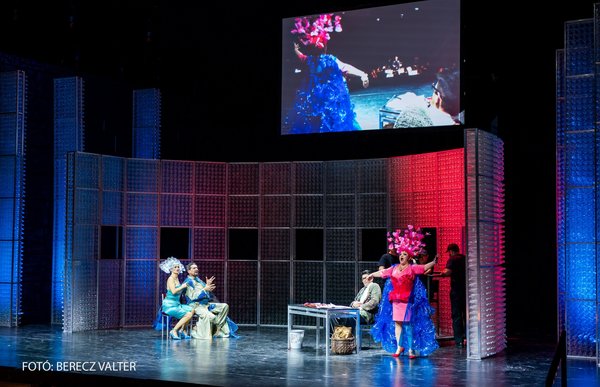
With the production premiered in May 2014 and directed by Máté Szabó, the OPERA embarked on an exciting venture. Karinthy Ring–winning writer, editor-in-chief, humorist, and head of the Dumaszínház (stand-up comedy) troupe Gergely Litkai was invited to write new spoken dialogue for the work, based on the original libretto and aimed specifically at a younger audience. Not only the text but also the structure was changed: the author brilliantly condensed the original ten characters of the libretto into five. The stage situations are highly concentrated, the merged characters are distinctive, and the text sparkles with wit. Accompanied by Mozart’s music, a contemporary version of the story unfolds, since theatrical stereotypes are still the same today. Indeed, some things never change…