
Parázsfuvolácska (The Magic Flute for Children)
MVM Piccolo Programme
Details
In Brief
Although Mozart's opera is a fairy tale for grown-ups, its wondrous elements, the trials of Tamino and Pamina, the comic antics of Papageno, and not least of all, the enchanting music of Mozart also make it a perfect introduction to the world of opera for children. It's just a matter of serving up the work to them in an appropriate fashion. The distinguished poet János Lackfi, a father himself, has helped us re-conceive and rework The Magic Flute expressly for the enjoyment of little ones. With added attractions galore, youngsters of all ages are sure to be enchanted!
Parental guidance
Events
Premiere: March 30, 2014
Synopsis
The fantastic opera by Wolfgang Amadeus Mozart and Emanuel Schikaneder reconceived for younger audiences!
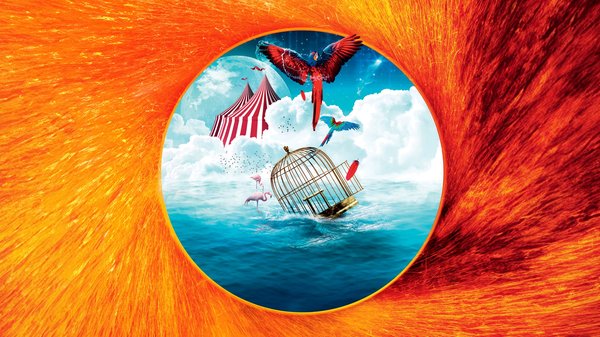
In this adaptation, children get to thrill to the gripping story of Prince Tamino and Papageno as it unfolds in Sarastro's Circus. Clowns, acrobats, aerial gymnasts, knife-throwers, fire-swallowers, magicians and Mozart's immortal melodies... Like in a fairy tale! As passions of love and hatred burn in the cavalcade of circus performers on the stage, so too will the viewers in the auditorium find their hearts aglow with the magic...
The popularity of The Magic Flute has never flagged in more than 220 years. This version created expressly for the primary school age group will be presented on the stage of the Erkel Theatre, featuring brand-new verse from János Lackfi and the directing of Attila Toronykőy.
Media
Reviews
“This highly viable and lovable little production was directed by Attila Toronykőy. The clown-Papageno is just right, as are the clown-Tamino and the young adolescent acrobats. Also just right, of course, are the tiny audience members waving their illuminated magic wands in the enormous auditorium."
Ferenc László, Magyar Narancs
Opera guide
The director’s concept
For me, The Magic Flute is an unfathomable work. It was probably Mozart’s genius combined with Schikaneder’s “marketing-oriented” collaboration that could give rise to such a creation, at once complex and simple, exalted and primitive, incomprehensible and straightforward. There are few works in the operatic repertoire that allow the director such freedom, such free thinking. In other words, whether the story is set on the Moon or under the sea, it still works. We have placed The Magic Flute for Children in a circus, where Sarastro is the great magician, the Queen of the Night is the ruler of the air, Papageno, Tamino, and their partners are the clowns, Monostatos is the knife thrower, the Speaker is the Ringmaster, and of course there are the animals that Tamino tames. Everything is in place for a truly exciting circus performance to come to life, set to Mozart’s fresh, contemporary-sounding music.
Attila Toronykőy
The circus
“Panem et circenses!” – that is, “Bread and circuses!” – went a famous saying of the Roman Empire around the beginning of our era. Indeed, beyond securing their daily bread, people have since ancient times had a need for spectacles and games that lift them out of everyday life. In Rome, already in the early centuries, large circus buildings were erected where hundreds of thousands of people could watch spectacular equestrian games, animal combats, battle scenes, and the bloody duels of gladiators. The very name of the circus also dates from these times, since the word circus means a circle or a circular building. After the fall of the Roman Empire, in the Middle Ages, institutions resembling circuses did not operate, but groups of performers of various sizes roamed the roads, stopping from time to time in towns and visiting feudal lords to entertain people with interesting and spectacular shows. Among them were jugglers, fire-eaters, conjurers, and singing storytellers.
The direct predecessors of what we now call the circus as a form of entertainment can be found precisely in the age of Mozart and Schikaneder, in England. A former cavalry officer named Philip Astley opened his circular theatre in London in 1768, where astonishing equestrian displays were presented, while between the riding acts clowns, tightrope walkers, and acrobats entertained the audience. The circular circus ring was also Astley’s idea: the audience could thus watch the performance simultaneously from all sides. This varied equestrian spectacle, rich in attractions, soon became popular not only in Europe but also in America. Traveling circus companies sprang up one after another, setting up their circular tents here and there; leadership of the troupe often passed from father to son, giving rise to famous circus dynasties. In Hungary, the first circus with a permanent venue was the Barokaldi Circus, which operated in Budapest’s City Park from 1871. Although that building no longer stands, not far from its former site rises the building of the Capital Circus of Budapest, constructed in 1972.
Lajos Csákovics