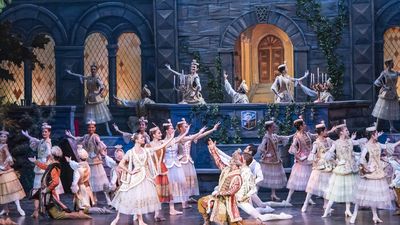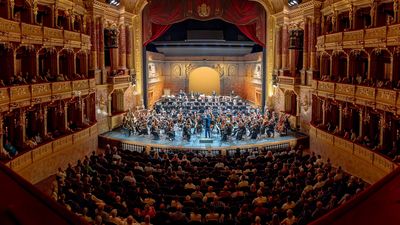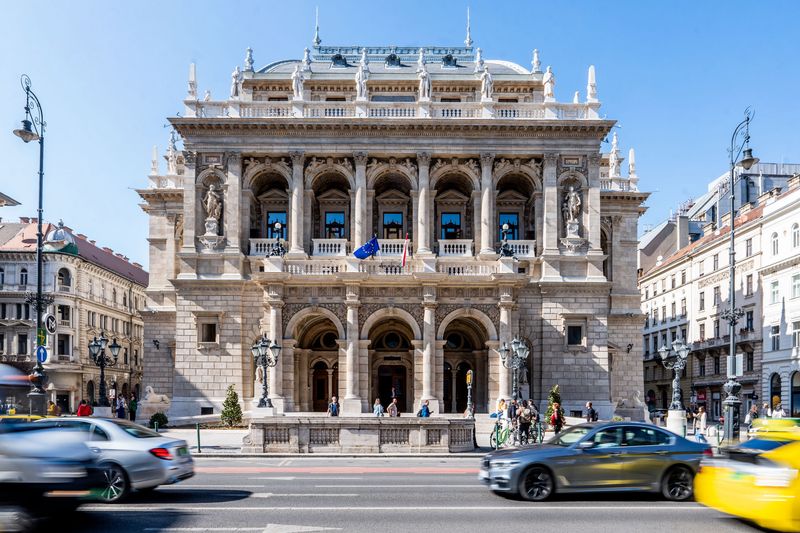
The restoration of the Hungarian State Opera House has been named among this year’s winners of the European Heritage Awards / Europa Nostra Awards. The announcement was made on Tuesday in Budapest by Hermann Parzinger, Executive President of Europa Nostra, at a press event held during a heritage protection conference at the Opera House.
“The project achieves a careful balance between the restoration of a historic theatre and modern performance requirements. The outstanding interdisciplinary work and the integration of advanced, sustainable technologies ensure the continued operation of the Opera House at the highest professional standard,” Hermann Parzinger quoted from the jury’s statement. This year, Europe’s most prestigious heritage awards are being presented to 30 exemplary projects from 18 countries across the continent. The Budapest Opera House, originally built in 1884, was recognised in the Conservation and Adaptive Reuse category.
“Today we celebrate a distinction that connects Europe’s past, present and future,” emphasised Gábor Zupkó, Head of the Representation of the European Union in Hungary. He noted that for more than two decades the Europa Nostra Awards have highlighted the most outstanding heritage conservation projects and initiatives, as well as the individuals behind them who are committed to preserving and passing on Europe’s shared cultural heritage. “This prestigious recognition not only rewards achievements in heritage conservation, but also shines a light on the European values behind them: cooperation, innovation and shared responsibility.” He also recalled that from among the thirty outstanding initiatives announced each year, the public can vote for their favourite, “thereby reinforcing that cultural heritage is truly a shared cause”. This year’s awarded projects also demonstrate that the prize encourages sustainability, community cohesion and economic resilience, he added.
“The Budapest Opera House is one of Europe’s most significant opera houses, and in terms of its architectural and acoustic qualities it belongs to the very top tier,” highlighted architect Gábor Zoboki, head of the architectural firm ZDA – Zoboki Design & Architecture, which carried out the reconstruction. He added that over the past thirty years Hungarian architecture has experienced a flourishing period that deserves recognition through such an internationally significant European award. On such occasions, it is not a single architect but an entire community that is honoured; it is a recognition of a whole profession, he stressed.
In Hungary there are still – and, “we hope, will continue to be” – professionals capable of delivering such a complex restoration, emphasised Attila Sághi, Deputy CEO for Technical Affairs at Városliget Ltd. Echoing Gábor Zoboki’s remarks, he added that the true award winners are the specialists, including carpenters, joiners and decorative painters, who took part in the reconstruction works.
Votes for the 2026 Public Choice Award, whose winner will receive €10,000, can be cast by those interested in cultural heritage until 12 May at https://vote.europanostra.org/. The awards ceremony will take place on 28 May at the Municipal Theatre of Nicosia in Cyprus, where the Grand Prix laureates and the Public Choice Award winner will also be announced.
(MTI)
Photo by Valter Berecz